THE POSE LIBRARY
Poses for Pictures: 23 Easy Ideas for Women, Men and Groups
Standing, sitting, walking, selfie, men's and group poses for pictures, each with three simple directions and an outline you can copy.
Try the idea on your own photo with Stunna.


Free to download. Pro options available.
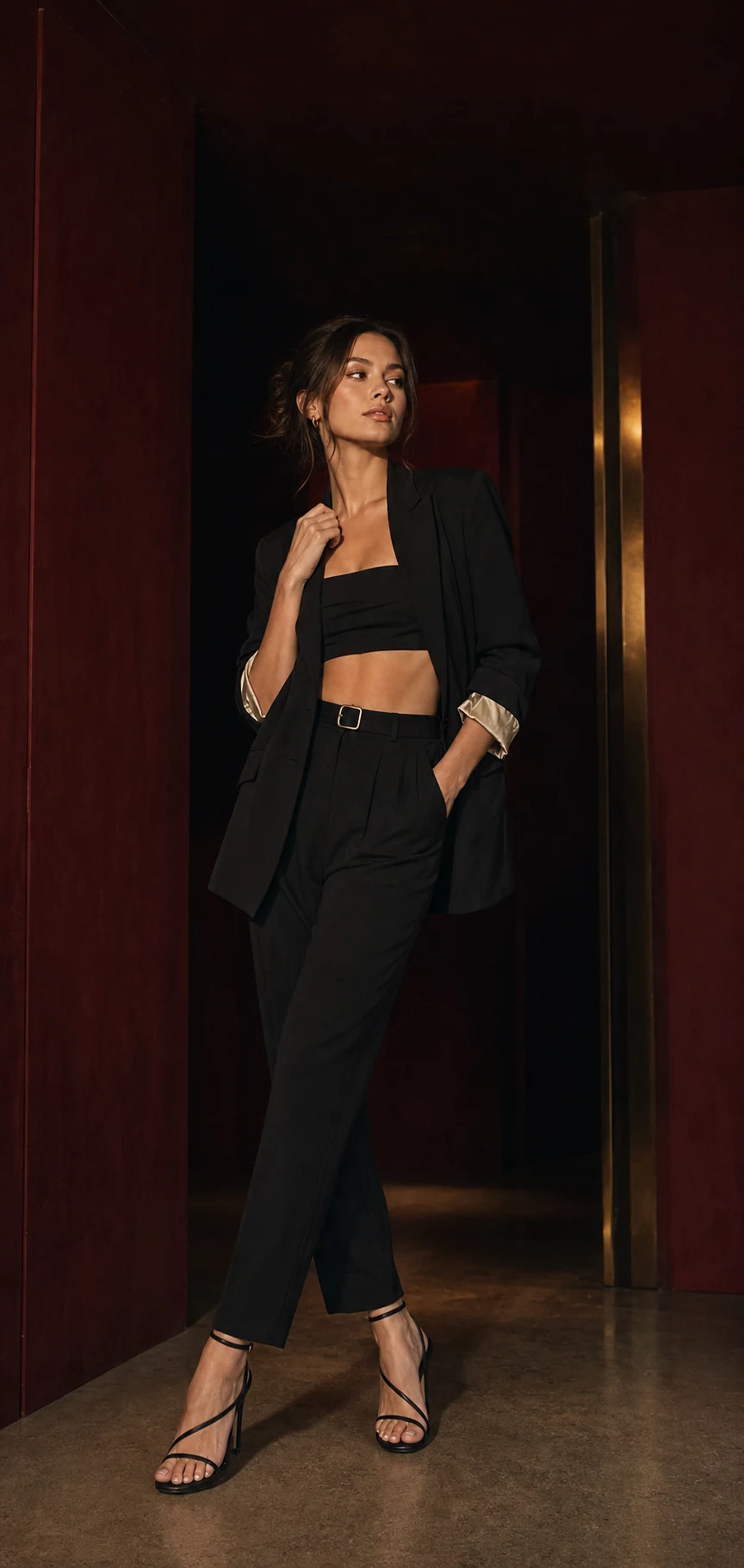
Good poses for pictures are not complicated shapes. Each one gives your body an angle, your weight somewhere to go, and your hands a small job. The 23 poses below come from the pose library we built for the Stunna app, grouped by situation: standing, sitting, walking, men's poses, selfies and groups. Every pose has three short directions you can read out to yourself or to whoever is holding the phone, and an outline that shows the finished shape. Pick two or three for your next shoot rather than trying all of them, and adapt anything to your own comfort and mobility.
Three fixes that make any pose work
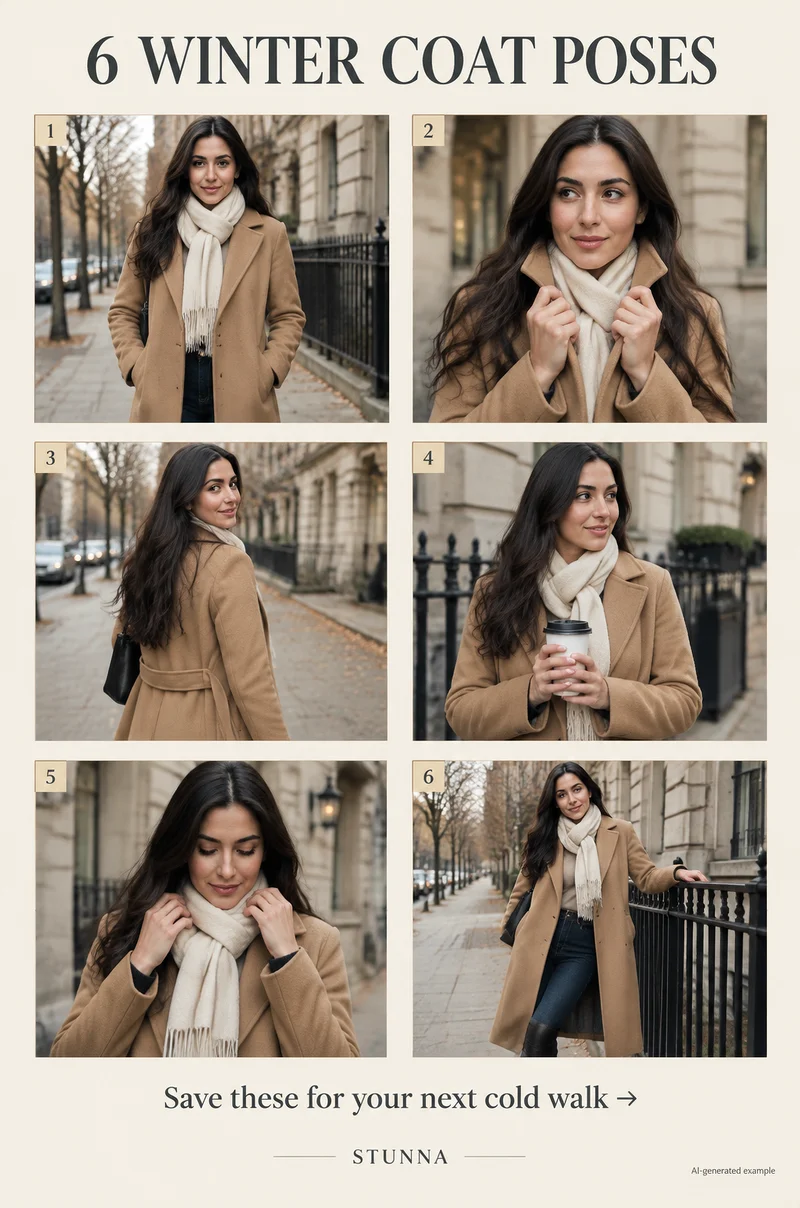
Most stiff photos come from the same three habits: standing square to the lens, splitting your weight evenly, and letting your arms hang with nothing to do. Fix those and almost any pose below will look relaxed.
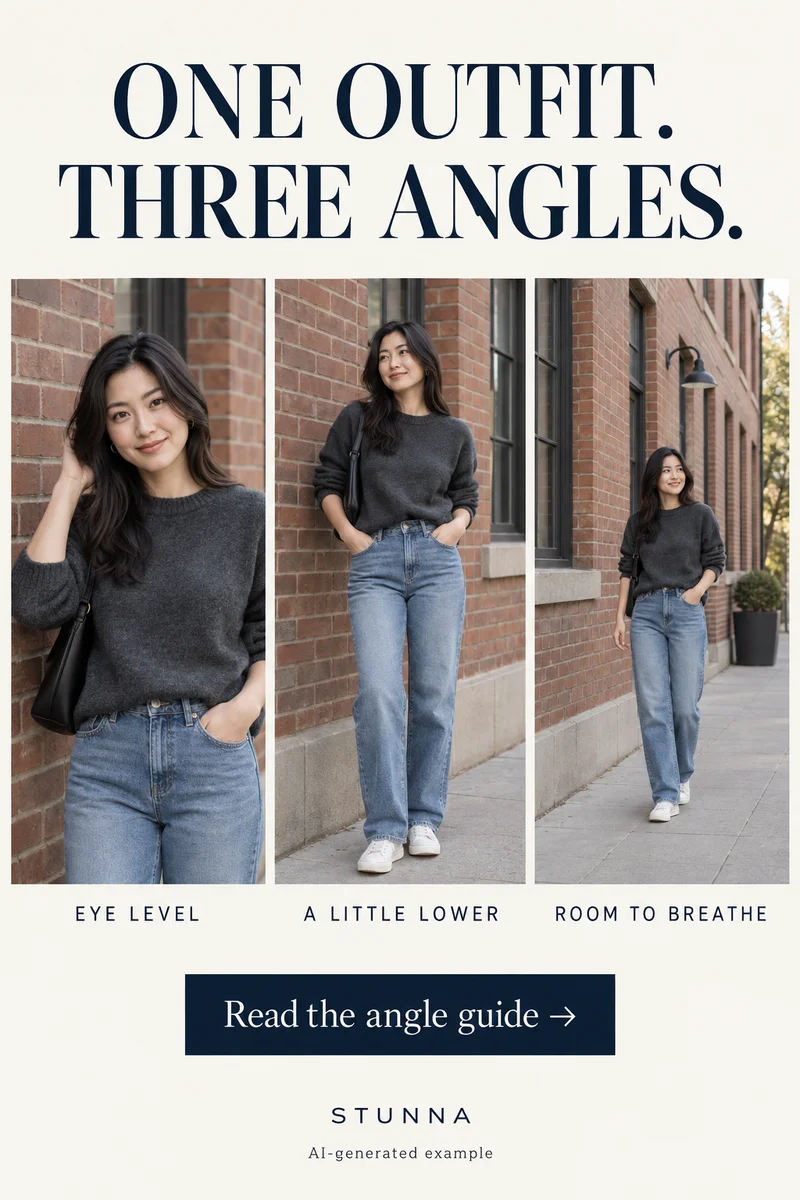
If you feel awkward in front of a camera, start with our guide to how to pose for pictures, which turns these fixes into a five-frame practice routine. Camera height matters as much as the pose, so check the phone camera angle guide before you blame your stance.
- Turn 15 to 45 degrees away from the camera, then bring your face back toward it. A slight angle adds depth and gives the photo a direction.
- Put most of your weight on the leg farthest from the camera. The front leg relaxes on its own, and your shoulders follow.
- Give each hand a job: a pocket, a bag strap, a railing, your hair, a cup. A loose grip always looks better than a hand floating in the air.
Standing poses for pictures
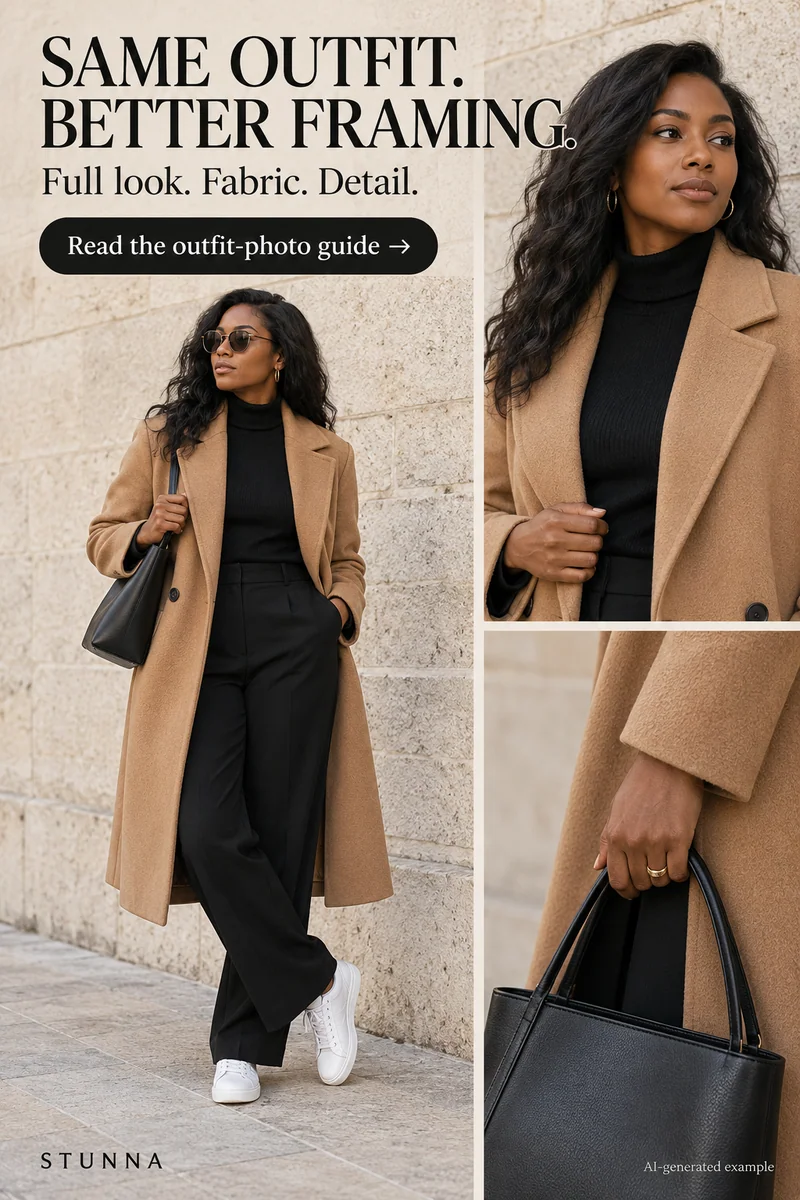
Standing poses do the most work in outfit, travel and full-body photos. A plain wall, a railing or open space is enough for all five. Ask the photographer to frame from just above your head to below your shoes so the crop stays a choice.
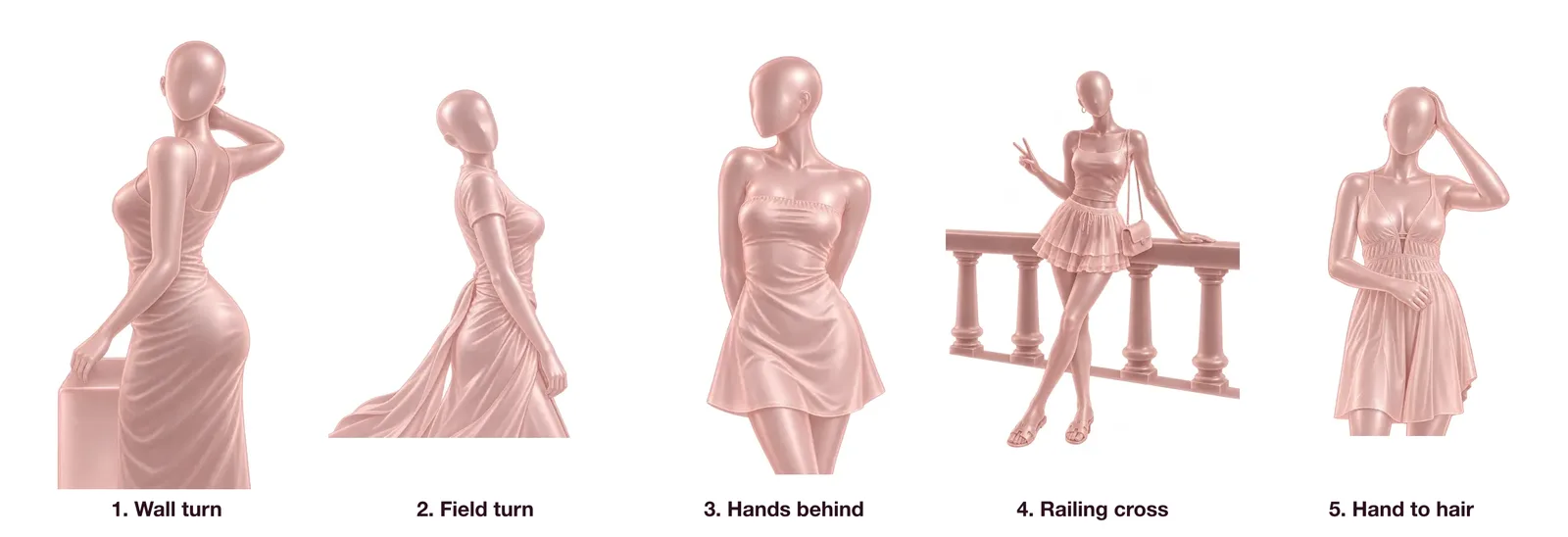
- Wall turn: Turn your hips away from the camera and place one hand softly behind your neck. Look back over your shoulder while keeping the near shoulder low. It makes a simple wall feel editorial.
- Field turn: Angle your body away from the lens and let the closest arm fall long. Bring your chin back toward the camera. Made for open landscapes, fields and beaches.
- Hands behind: Bring both hands loosely behind your back and open through your collarbones. Keep your torso forward and turn your face away. A clean, minimal stance for gardens and plain backdrops.
- Railing cross: Rest one hand behind you on a railing and cross one ankle loosely over the other. Keep the free hand small and relaxed near shoulder height. The classic travel pose for bridges and balconies.
- Hand to hair: Place one hand lightly in your hair and rest the other across your lower torso. Shift your weight into one hip without raising your shoulders. An easy front-facing pose that gives both hands a natural job.
Sitting poses for pictures
Sitting poses feel less exposed, which is why they often look the most natural. Keep your spine long, sit toward the front edge of the seat and angle your body rather than facing the camera straight on. For more ideas at a table, see our sitting poses for photos guide.
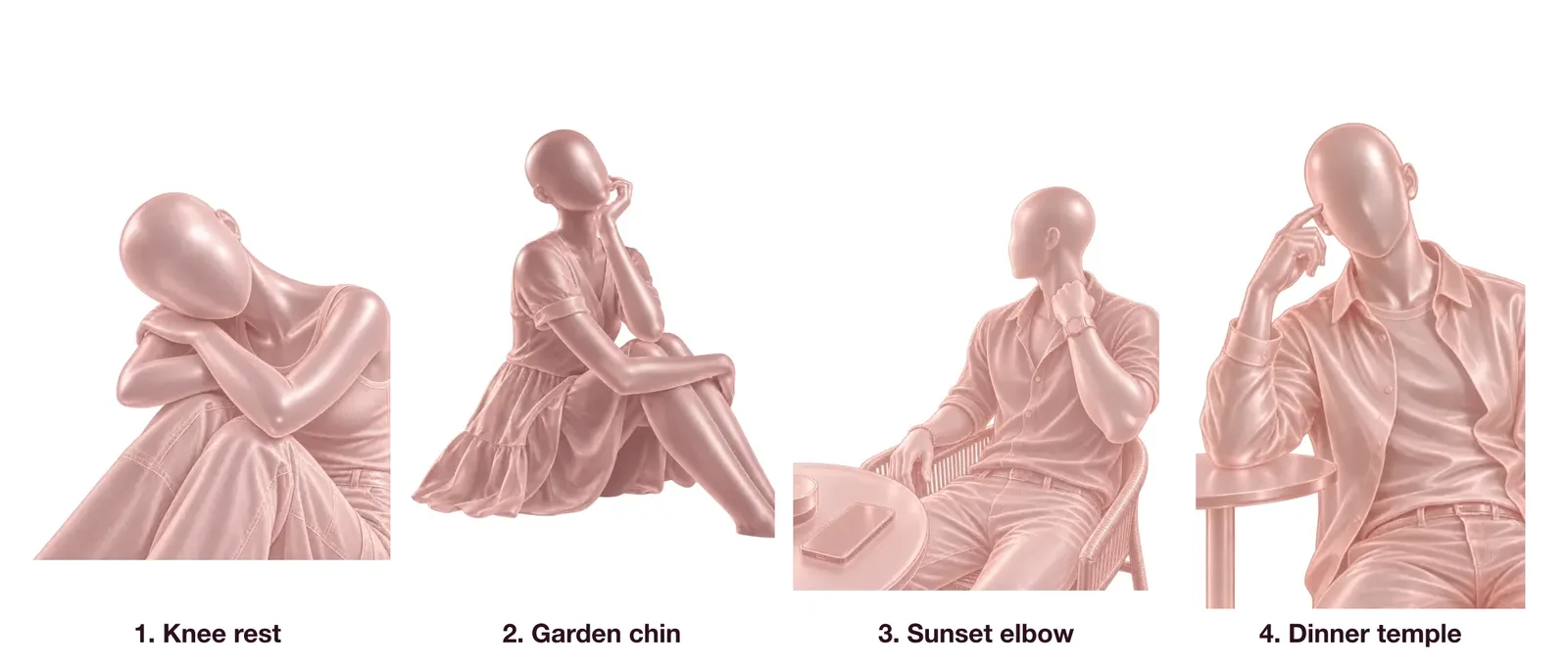
- Knee rest: Draw one knee toward your chest and fold both forearms across it. Rest your cheek on the top arm without squashing your neck. A grounded, close pose for steps, grass or a sofa.
- Garden chin: Gather both knees slightly to one side and rest one forearm across them. Support the other elbow and touch your cheek with relaxed fingertips. Soft and easy on a lawn or picnic blanket.
- Sunset elbow: Sit back with your torso angled away from the table. Lift one elbow and bring that hand near your neck, keeping the other arm low, and look past the horizon. Works for anyone at a terrace or bar table.
- Dinner temple: Sit diagonally to the table edge and rest one elbow on it. Touch your temple lightly, keep your spine long and your face open to the camera. The go-to restaurant portrait.
Walking poses for candid pictures
Movement hides stiffness. Walk slowly, let the photographer shoot a burst, and pick the frame where your back foot is just leaving the ground. Our walking photo poses guide covers pace, burst settings and where the photographer should stand.
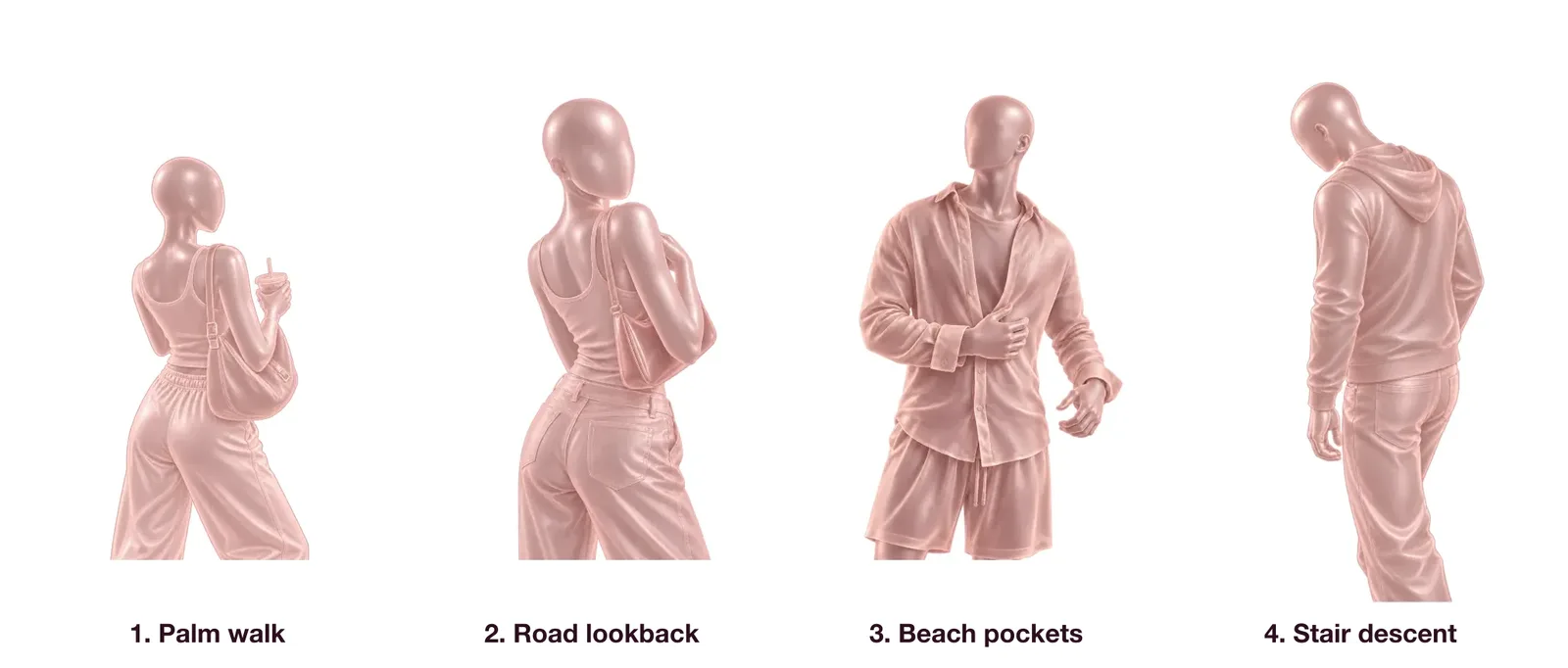
- Palm walk: Walk slowly away from the camera holding a coffee or small bag close to your chest. Turn your head just enough to show your profile. Relaxed shoulders make it read as candid.
- Road lookback: Start with your back to the camera and gather one forearm near your chest. Turn through your shoulders and look back mid-step. Best on a quiet street or path with a long background.
- Beach pockets: Take a slow step along the waterline with one hand near your shirt opening. Let the other arm swing naturally away from your body. A men's favorite that works on any open path.
- Stair descent: Walk down one step at a time with your back angled to the camera. Let both arms hang with a natural swing and lower your chin slightly toward the next step. Stairs add height and lines for free.
Poses for pictures for men
Men's poses usually look best with a wider stance, hands near pockets or folded arms, and the gaze slightly off camera. The sunset elbow, dinner temple and beach pockets poses above also work for men. These four are built for standing shots.
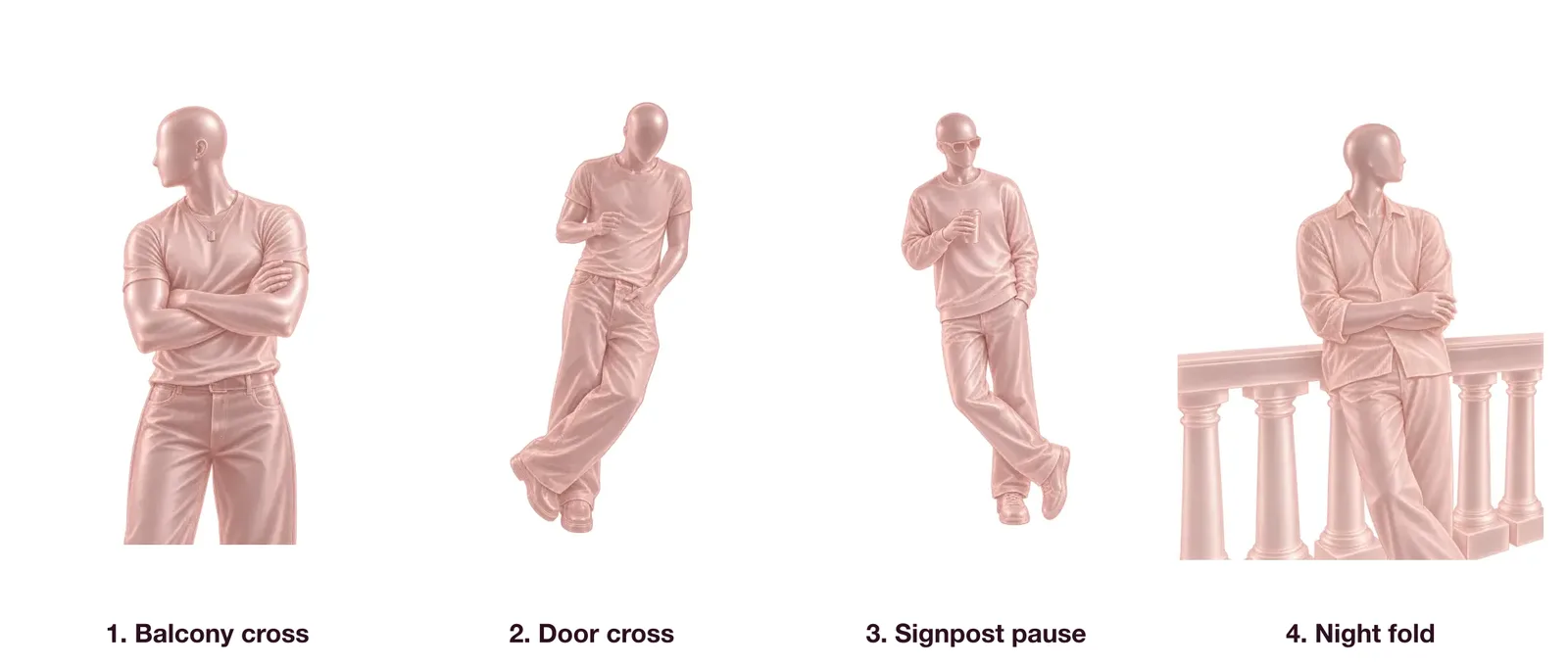
- Balcony cross: Stand tall with your hips facing the camera and fold your arms loosely below the chest. Turn your chin toward the open side of the view. Composed without looking stiff.
- Door cross: Rest your upper back lightly against a wall or door and cross one ankle in front of the other. Lower your gaze and keep both hands small near your pockets. Easy anywhere with a wall.
- Signpost pause: Stand beside a post with one foot crossed forward and hold a drink around mid-chest. Let the free hand settle low near a pocket. A street pose that looks like you were caught mid-coffee.
- Night fold: Stand squarely beside a railing, fold your arms loosely at the waist and turn your face toward the distant lights. Made for rooftops and city views after dark.
Selfie and close-up poses
Close-ups are about the face, shoulders and hands, so small changes matter. Hold the phone slightly above eye level and turn one shoulder toward it. For full-length reflections, the mirror selfie guide covers phone position and outfit framing.
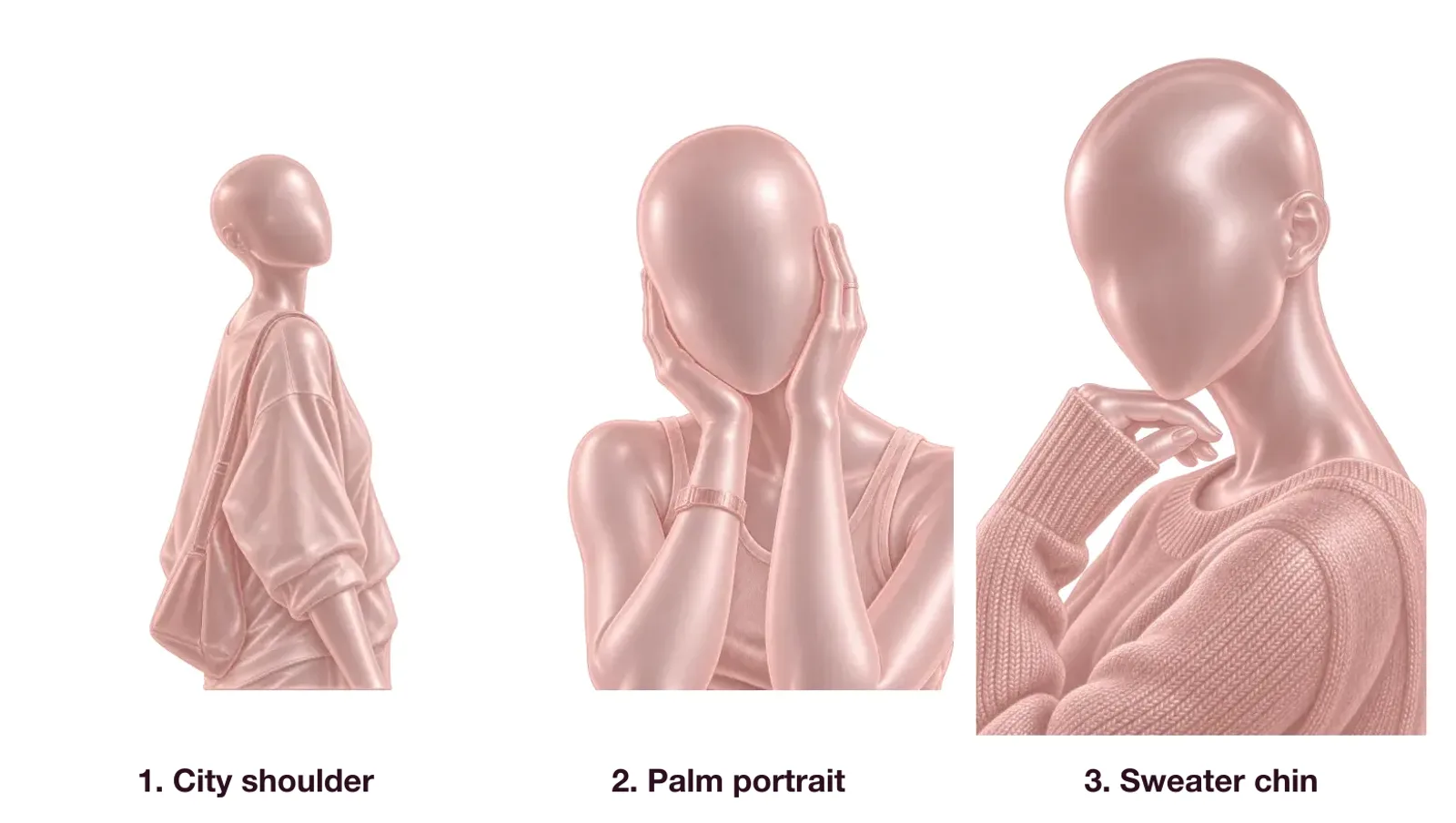
- City shoulder: Turn your body past the camera and bring the near shoulder slightly forward. Look back with your chin gently lifted. An effortless over-the-shoulder portrait.
- Palm portrait: Plant your elbow below the frame and rest the side of your face in one open palm. Keep your eyes level and the other shoulder relaxed. A classic that works at any table.
- Sweater chin: Turn your face three-quarters toward the lens and float your fingertips just beneath your chin. Pull the far shoulder back for a clean neckline. Polished without looking posed.
Group poses for pictures
With groups, the goal is every face visible at a different height. These three poses are written for four people but scale to three or five. For two people, try our couple photo poses; for bigger groups, the group photo guide covers spacing and blinks; and in a booth, follow the photo booth poses four-frame plan.
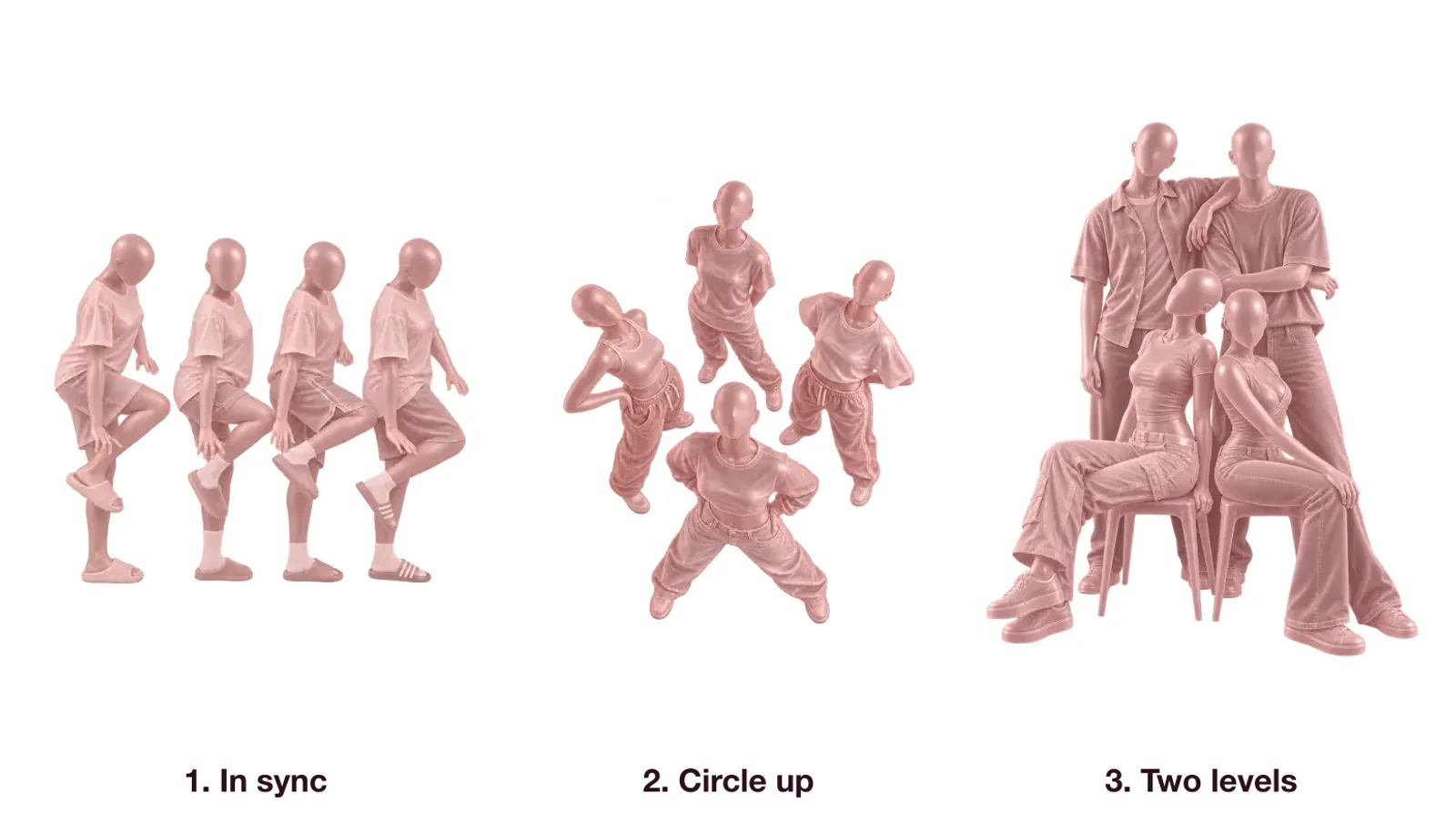
- In sync: Stand in a close line, angle your bodies slightly to one side, and each lift one knee to a comfortable height. Keep hands low and loose and match each other's rhythm without hiding anyone.
- Circle up: Stand in a loose diamond with space between each person while the photographer shoots from a safe, raised spot. Everyone looks up, each with a slightly different stance and hands at hips or behind the back.
- Two levels: Two friends sit on chairs angled slightly outward while two stand behind with relaxed shoulders and staggered heads. Rest a hand on a friend's shoulder or your own thigh, and keep all four faces visible.
Which pose to use where
The location usually decides the pose for you. Use this table to pick two options before you arrive, then spend the shoot on light and expression instead of thinking about your hands.
| Location | Poses to try | Why they work |
|---|---|---|
| Plain wall | Wall turn, door cross | The wall supports your weight and keeps the background clean. |
| Café or restaurant | Dinner temple, palm portrait | The table gives your elbow and hands an obvious place to rest. |
| Street or crosswalk | Road lookback, signpost pause | Movement and props make the photo look caught, not posed. |
| Balcony, bridge or railing | Railing cross, night fold | The railing anchors one hand and adds strong lines. |
| Beach or field | Field turn, beach pockets | Open space suits long lines and slow walking frames. |
| Stairs | Stair descent, knee rest | Steps add height for standing shots and a seat for sitting ones. |
| Park or lawn | Garden chin, hands behind | Soft ground invites relaxed sitting and minimal standing poses. |
| Friends, four people | Two levels, in sync | Different heights keep every face visible. |
How to practice before the shoot
Pick three poses from this page and try each one for a few seconds in a mirror or with your front camera. Then shoot each pose as a short burst and keep only the frames where your shoulders are down and your hands look loose. Ten minutes of practice is usually enough to make a pose feel like yours.
If you want to rehearse a sequence, the free online photo booth runs a four-shot countdown on your webcam or phone, which is a quick way to cycle through poses and see which ones you like.
A few useful answers
What is the best way to stand for a photo?+
Turn your body 15 to 45 degrees away from the camera, put your weight on your back leg and bring your face back toward the lens. Keep your shoulders down and give your hands something to hold or rest on.
What are cute poses for pictures?+
Hand to hair, the over-the-shoulder city shoulder, the palm portrait and a walking lookback are easy, flattering choices. They work because each one includes a little movement or a hand with a job.
What are the different types of photography poses?+
Most poses fall into standing, sitting, walking or movement, close-up, and group poses. Within each type, the direction of your body, where your weight sits and what your hands are doing create the variations.
Which pose is the best for a picture?+
There is no single best pose, but a slight turn with your weight on the back leg and your face toward the camera works almost everywhere. Choose the pose by location: lean on walls, sit at tables and walk in open spaces.
How should men pose for pictures?+
Use a slightly wider stance, keep hands near pockets or arms loosely folded, and look a little off camera. Leaning against a wall with crossed ankles and a slow walking shot are two reliable starting points.
Is there an app that shows you how to pose?+
Yes. We make Stunna, which has a library of 140+ poses with three-step directions and a live outline in the camera that you line up before you shoot. Some pose guides need Pro. You can also practice with any camera app and a mirror.