THE WALKING PHOTO GUIDE
Walking Poses: 6 Candid Ideas for Photos
Walk toward the camera, not at it. Six candid walking poses, a four-step setup and the common mistakes that make walking shots look stiff.
Try the idea on your own photo with Stunna.


Free to download. Pro options available.
Walking shots look effortless when they work: a natural step, a relaxed face, a sense that the camera just happened to catch you. They rarely happen by accident. The secret is walking slowly along a planned line while the photographer shoots a burst, then keeping the frame in the middle of a step. This guide covers where to walk, six poses that look candid, a four-step setup and the mistakes to avoid. Example images are AI-generated illustrations, not actual Stunna results.
Walk toward the camera, not at it
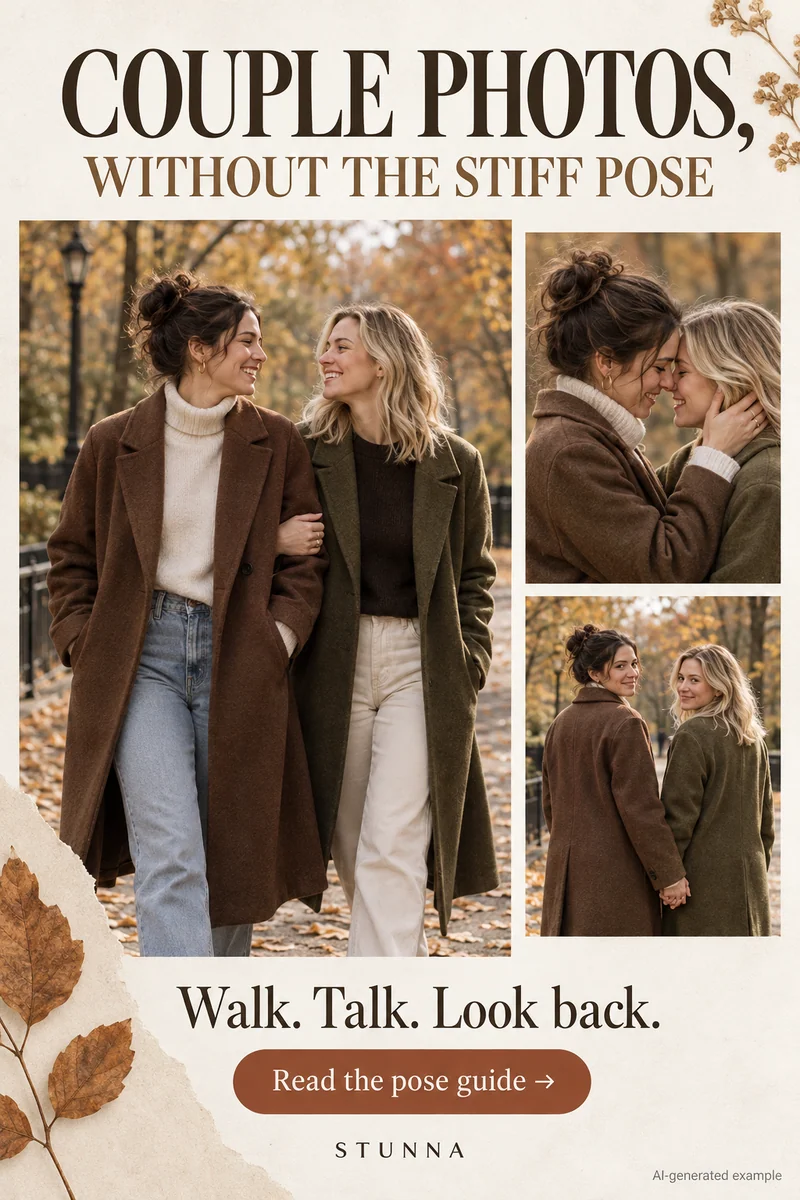
Walking straight at the lens looks confrontational and stiff. Angle your path a little instead, so you pass slightly to one side of the photographer. It shows the shape of the body and the outfit, and it gives the picture direction. Take slow, normal steps; a natural pace is easier to photograph than a fast march.
Look past the lens rather than into it. Choose a point just beside the photographer, a shop sign or a tree, and let your eyes rest there. Glancing at the camera for one step out of several can work, but the candid feel comes from not performing. If you want more still options too, our easy photo poses are a good base.
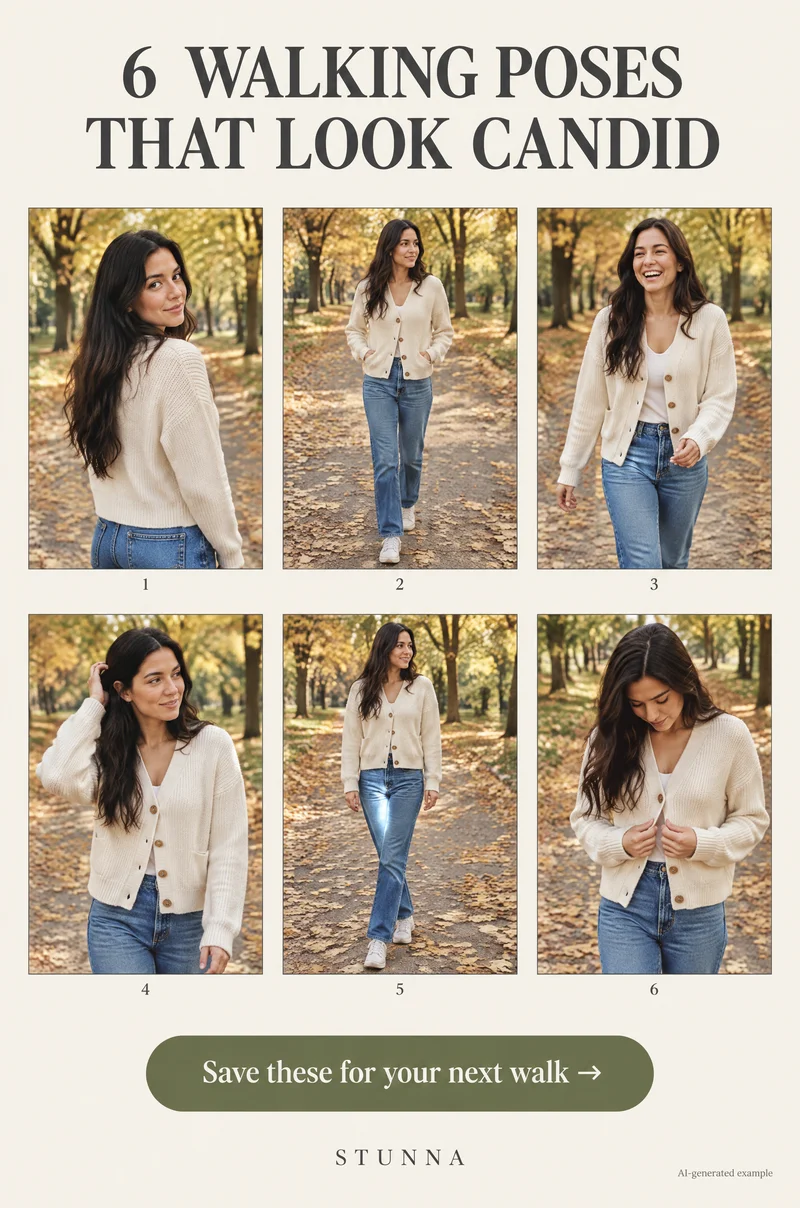
6 walking poses that look candid
Try each one for a few steps while the photographer shoots. You do not need all six in one session. Poses that involve the coat or pockets are a natural fit for showing clothes, and the outfit photo guide has more detail shots to pair with them.
- Look back over your shoulder: walk away from the camera, then turn your head back toward it for a step. Keep the turn from the shoulders, not just the neck.
- Hands in pockets mid-step: one or both hands in coat or jeans pockets with relaxed elbows. It calms busy arms and suits colder-weather outfits.
- Laugh mid-stride: have the photographer say something silly, or think of a real joke. A genuine laugh while moving is the most candid frame of all.
- Adjust your hair while walking: lift one hand to tuck or brush back your hair as you step. It adds a natural gesture without looking posed.
- Cross one foot in front of the other: place each step slightly across your center line. It narrows the silhouette and gives a model-like sway without exaggeration.
- Glance down at your coat: look down at a button, zip or pocket as if checking it. It shows off the outfit and keeps the face relaxed.
The walking shot in 4 steps
This setup works on a phone with no extra gear.
- Pick a line with space behind you: choose a quiet path, pavement or alley where you can walk for ten or fifteen steps, with some distance between you and the background so it falls softly out of focus.
- Photographer low, a few metres ahead: the photographer stands a few metres in front, slightly to one side of your path, and holds the phone around chest or waist height. Shooting a little low makes legs look longer.
- Walk slowly, swing your arms: start a few steps back so you are already moving naturally when you reach the frame. Let your arms swing gently and keep your shoulders relaxed.
- Shoot a burst, keep the mid-step: shoot a burst as you approach, then pick a frame where one leg is clearly forward and the back heel is lifting. Mid-step frames look most natural; feet planted together look frozen.
Where the photographer should stand
The photographer's position matters as much as the walk. Standing a little to the side of the path, rather than directly in it, gives the angled approach and means nobody has to dodge. Zooming in slightly from farther back flattens the background and makes the shot look more like a candid street photo. Walk the line once together first so you both know where to start and stop.
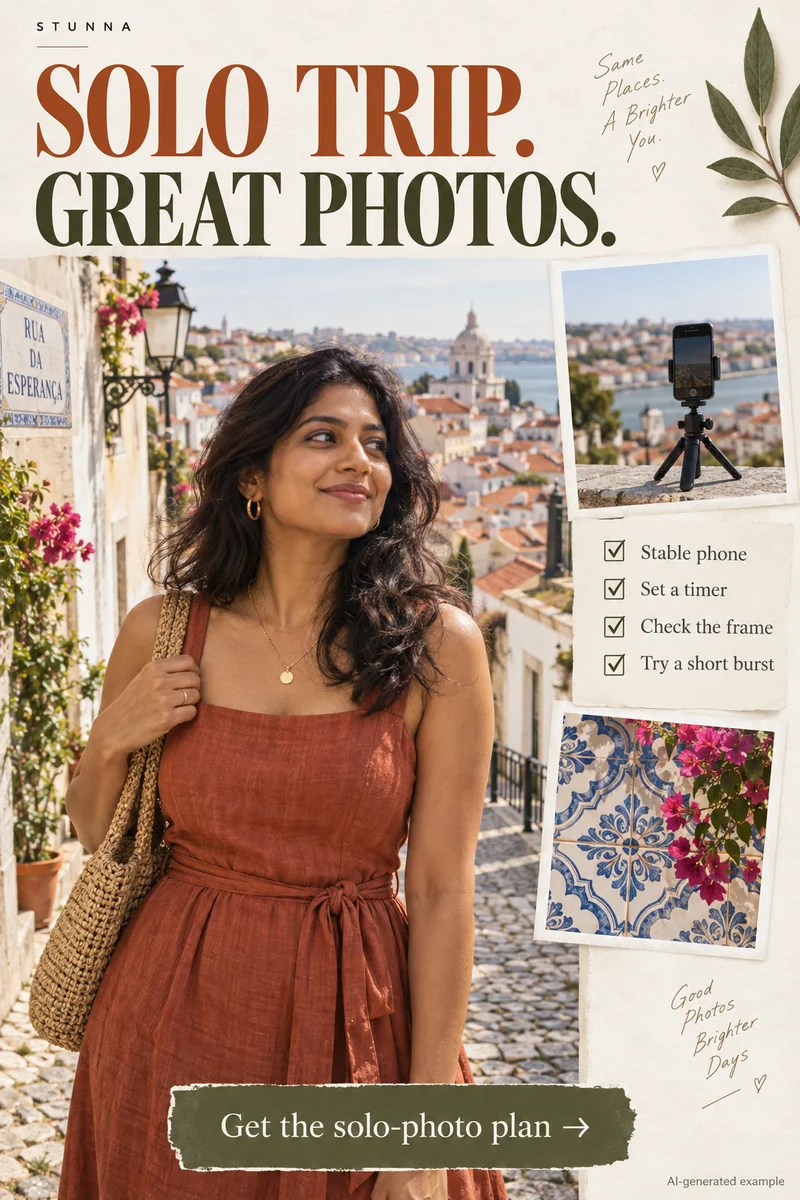
Choose a safe place. Never walk into traffic, step backwards into a road or stand in a cycle lane for the shot. Quiet side streets, parks and early mornings on popular streets are easier and safer. On trips, the city break photo guide and our solo travel photo guide cover finding good spots and shooting alone with a timer.
Common walking photo mistakes
Most stiff walking shots come from the same few habits. Fix these and the rest follows.
- Walking too fast: quick steps blur arms and legs and make the expression tense. Slow down more than feels normal.
- Staring at the lens: it breaks the candid feel. Look past the camera and only glance at it occasionally.
- Stiff arms: arms held tight to the body look frozen. Let them swing, use a pocket, or hold a coffee or a bag.
- Busy background right behind you: people and signs directly behind your head distract. Move the line or wait for a gap.
- Choosing a frame with both feet down: always pick a frame from the middle of a step, where movement is visible.
Pick the frame and finish the edit
Go through the burst at full size. Check the face first, especially the eyes, because walking frames often catch a blink; the blink photo guide explains how to choose a keeper. Then check feet and hands. Keep two or three of the best and compare them before deleting the rest.
A walking shot often becomes the cover of a travel photo dump. For a lo-fi finish, the digicam filter adds a compact-camera style. If a stranger walked into the background, our ChatGPT photo rescue prompts offer careful wording. Walking shots also pair well with a dinner party photo set, sparkler photos or a moody red light portrait at the end of the night.
A few useful answers
How do I look natural in walking photos?+
Walk slowly on a slight angle toward the camera, look past the lens and let your arms swing. Shoot a burst and keep a mid-step frame.
Where should the photographer stand for walking photos?+
A few metres ahead, slightly to one side of your path, holding the phone fairly low. Zooming in from farther back can make it look more candid.
Why do my walking photos look stiff?+
Usually walking too fast, staring at the lens, stiff arms or a frame with both feet down. Slow down and pick a frame from the middle of a step.
Where is safe to take walking photos?+
Quiet paths, parks and side streets. Never walk into traffic or stand in a road or cycle lane for the shot.