THE OVERCAST PHOTO GUIDE
Cloudy Day Photography: Portrait Tips for Overcast Light
Use overcast light for clear expressions, find separation from the background, and add warmth only where it helps.
Try the idea on your own photo with Stunna.


Free to download. Pro options available.
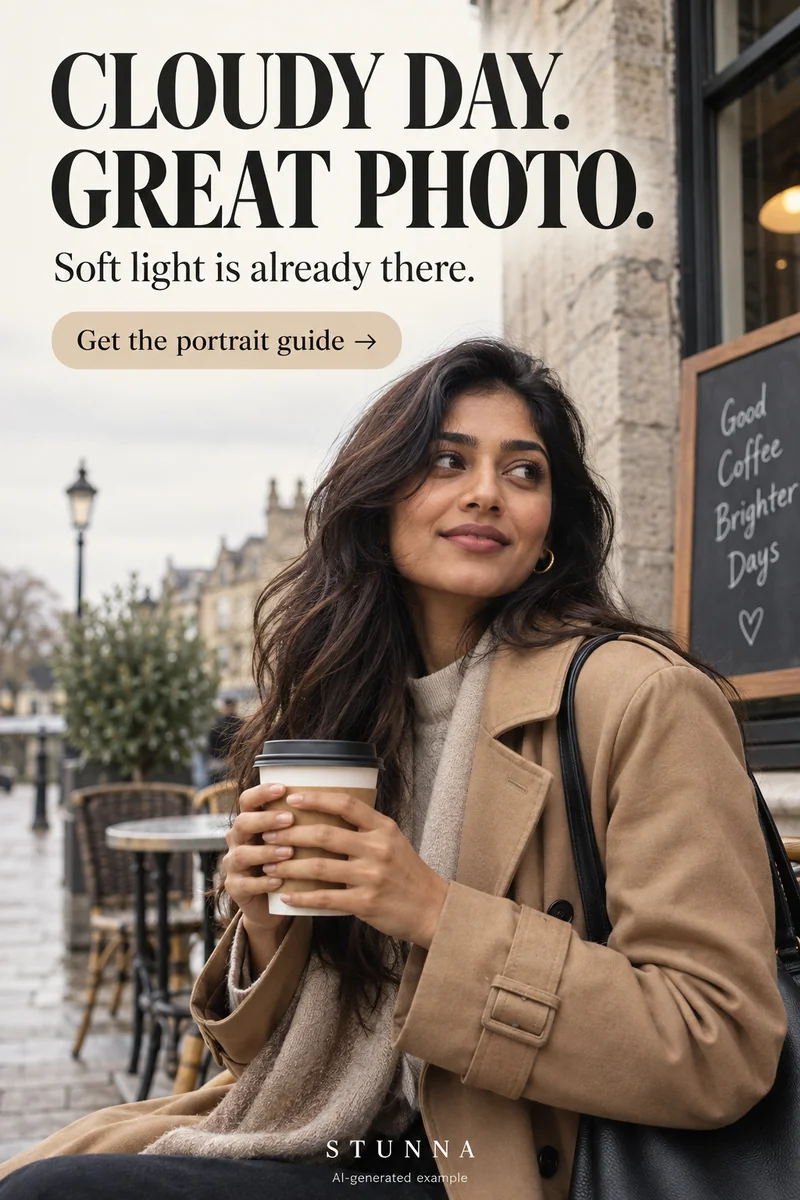
A cloudy day can be useful portrait weather. You have room to move without chasing the tiny patches of shade that photos in harsh sunlight often need, and people may find it easier to keep their eyes relaxed. The challenge is giving the picture direction and depth when the scene looks evenly lit. Work with background, distance, and color before deciding whether it needs a warmer edit. AI-generated visual examples illustrate the look; they are not measured Stunna outputs.
Find the brighter side of the scene
Overcast does not always mean every direction looks the same. Turn slowly and check where the face appears clearest. Open sky may light the face better than a deep covered doorway. A pale wall can reflect light; a dark awning can make the eyes look shaded. Test a few positions rather than choosing the first attractive background. If you move indoors, the same idea applies to window light photography: face the brightest opening.
Look for a simple patch of color behind the person: a wall, greenery, or a quieter section of street. Leave space between the subject and that background. You can create separation through composition even when the light is subtle.
Follow this five-step portrait sequence
Keep the first setup simple, then change one thing per frame.
- Choose a location with open sky above or in front of the person. Avoid starting deep under a roof where the face looks dark.
- Use the main camera and tap the face to focus where supported. Take a test and check skin detail rather than judging only the background.
- Turn the shoulders slightly, then bring the gaze toward the lens. Let hands rest on a jacket, bag, or comfortable surface.
- Capture a still portrait and a small movement. If the moving photo is blurred, repeat it more slowly and keep a still backup.
- Take a wider picture that includes the place. Compare it with the close portrait before moving to another background.
Use color to give the portrait a focal point
If the sky, pavement, and outfit are all gray, try a background with a different tone or a crop with less empty sky. A warm wall behind a neutral outfit may provide enough contrast without changing what the person is wearing. Autumn leaves can do the same job, and our fall photoshoot ideas suit soft overcast light.
Watch bright objects near the edge of the frame. A white car or reflective sign can attract more attention than a face. Shift the camera a little, check the whole frame, and take another picture.
Fix these three cloudy-day portrait mistakes
Identify the problem before changing the whole photograph. These three checks give you a useful starting point.
- Busy background: change the angle or crop so bright cars, signs, and branches do not compete with the face.
- Dark face: move toward open daylight or carefully adjust exposure where supported. Keep detail in skin and pale clothing rather than raising brightness everywhere.
- Orange edit: reduce added warmth or saturation if skin and neutral objects all become orange. The cooler original may already suit the weather. A monochrome version made with our free black and white filter avoids the color question entirely.
Choose between keeping the weather and changing the mood
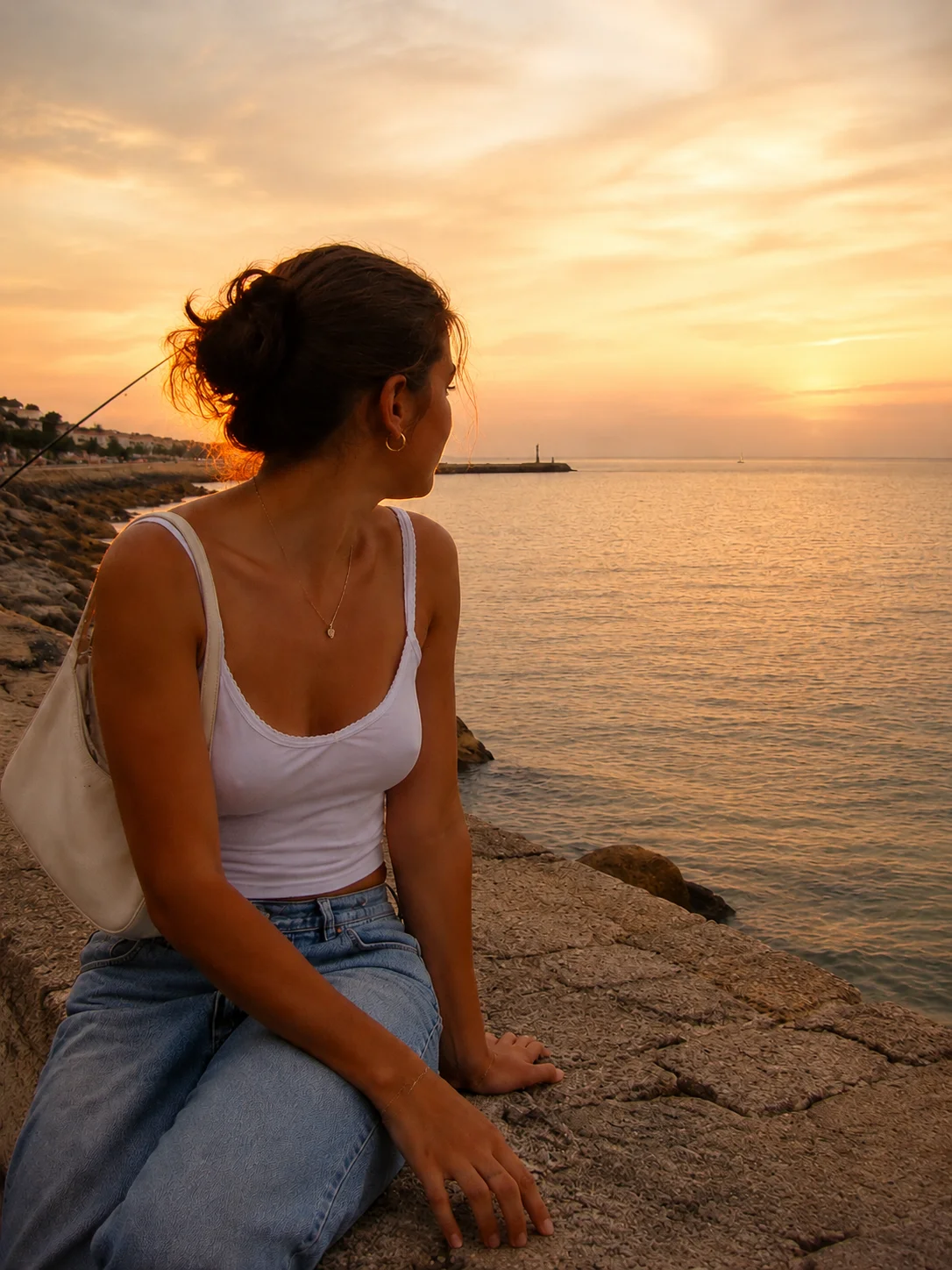
For a manual edit, preserve the soft light and adjust contrast gradually. If you want a creative warmer interpretation, Stunna’s Golden Hour is designed to turn overcast lighting into a warm low-sun mood with rim light. Soft Morning offers a calmer, paler alternative. If you can wait for the real thing, see our golden hour photography guide; even light also suits black and white portrait photography. Generated lighting can change details, so review identity and whether the new highlights and shadows make sense together. Keep the original if its atmosphere tells the story better.
A few useful answers
Is cloudy weather bad for portraits?+
It can give you useful, even light. Choose a position that keeps the face readable and use background and framing to create depth.
Should I include the gray sky?+
Include it when it helps explain the place or mood. For a closer portrait, a simpler background with less empty sky may give the person more attention.
Does a warm edit make the picture a real sunset photo?+
No. An AI relight is a creative interpretation. Describe a substantially edited image honestly and preserve the original separately.